Criminal and Non-Criminal Offences
Police officers, crown prosecutors, school administrators or any member of the community may choose to refer an offender to the program as an alternative to filing a criminal charge within the criminal justice system.
This option enables the offender, if they assume accountability for their actions and are prepared to repair the harm they have done, to avoid a criminal record and the downward spiral for their future which is frequently accelerated by entering the criminal justice system.
The Crown Prosecutor may refer a case (post-charge) to the RRDRJ program if deemed appropriate.
Participating local schools may make a direct referral to the program as a proactive approach to help address high risk situations.
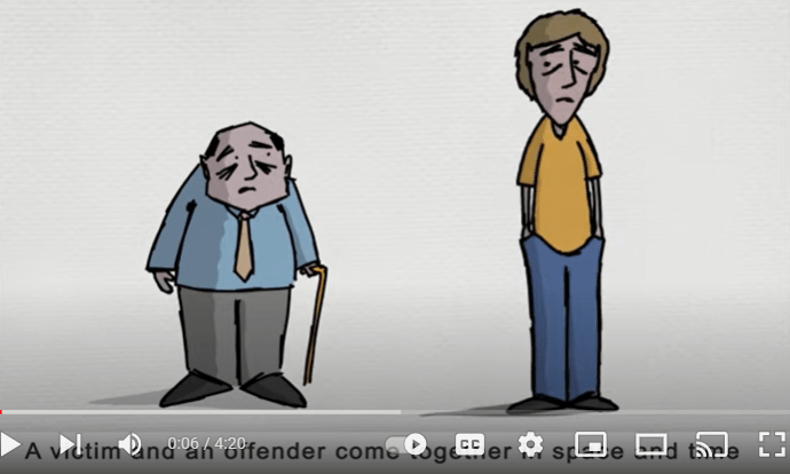
This short video provides a great overview of why you might choose restorative justice as an option
Click on the link below to learn more and to access referral forms and consent forms.
When a referral is received by the program
- A confidential case file is initiated.
- The program coordinator reviews the referral and collects additional information as required to determine appropriateness of referral for the Restorative Justice process. This may involve phone calls to the referring individual, the police involved in the case, and other relevant involved parties.
- If the case is deemed appropriate, the coordinator assigns both a primary and support facilitator to the case
- The “primary” facilitator will contact both the person(s) harmed and the wrong doer and complete pre-case conference interviews.
- If following the pre-conference interviews, it is agreed by all parties that they would like to proceed with the restorative conference, a time and location is arranged and additional participants as needed are invited to attend.
The Conference
The focus of the Restorative Conference is to understand the impact of the offence, provide opportunity for both person(s) harmed and wrong doer to tell their story, identify the root cause of the offence if possible and collaborate to identify actions that would restore the harm or the impact of the harm. Facilitators guide participants through a very structured dialogue regarding the harm, thoughts and feelings about the impact of the harm, and what needs to be done to effectively repair the harm. The outcome is an agreement arrived at by consensus.
The Contract
Once collaborative restorative solutions are agreed to, a contract is signed by the wrong doer and the person who was harmed. The wrong doer is agreeing to complete the requirements of the restorative action plan contract within a specified time frame. This contract is legally binding for Restorative Justice Processes and is arrived at through consensus of all the Restorative Process participants/stakeholders. It consists of the actions to be taken to meaningfully repair the impact of the harm resulting from the wrongdoing.
If the wrong doer fails to comply with agreed action plan within the agreed upon timelines, the file is returned to police or referring agency for formal processing within the criminal justice system

Review our policy and procedure manual
 Regional Red Deer Restorative Justice Society